Making Progress!
The Invasive Spartina Project (ISP) team and our partners are continuing to transform invasive Spartina-dominated marshes into native salt marsh and mudflat habitat to support a diversity of native plants and wildlife. Over the more than 20 years since the project began, we are now seeing large-scale recovery, with a nearly 98% reduction of invasive Spartina across the San Francisco (SF) Bay Estuary. Sites that were formerly dense monocultures are now rich in habitat, returned back to biologically rich mudflats or restored with native plants by ISP’s Restoration Program and through natural recolonization.
Biologists have observed an overall increase in rail populations and an expansion of territory to four former salt pond sites in the Eden Landing Ecological Reserve where tidal flows have been restored, as well as to several other restored salt ponds at Bair Island and Alviso (more below). The team is extending treatment over the next few years to the three sites in San Leandro Bay that were restricted from treatment since 2011. ISP partners have been actively engaging with community groups and agencies to share future plans and have broad support as we plan for phased treatment and revegetation that protects rails and healthy tidal marshes.
Note: The 2025 Rail Survey Report and 2025 invasive Spartina survey map have been posted to the ISP website.
Key Link in Living Shorelines
Invasive Spartina removal and containment, paired with native tidal marsh and upland ecotone plantings and high tide refuge island construction, are successful restoration methods that are increasingly becoming integrated into living shoreline efforts in the region. The State Coastal Conservancy and the San Francisco Estuary Institute have initiated a Living Shorelines Collaborative to share information and transfer knowledge. They are also, with the help of a panel of experts, drafting a Guidance document for regional design and construction of living shorelines, that forms another important complementary program with the ISP for stewardship of the SF Bay Estuary.
Read on for updates, with special highlights from the restoration and rail monitoring programs, which completed their field seasons this spring.
Restoration
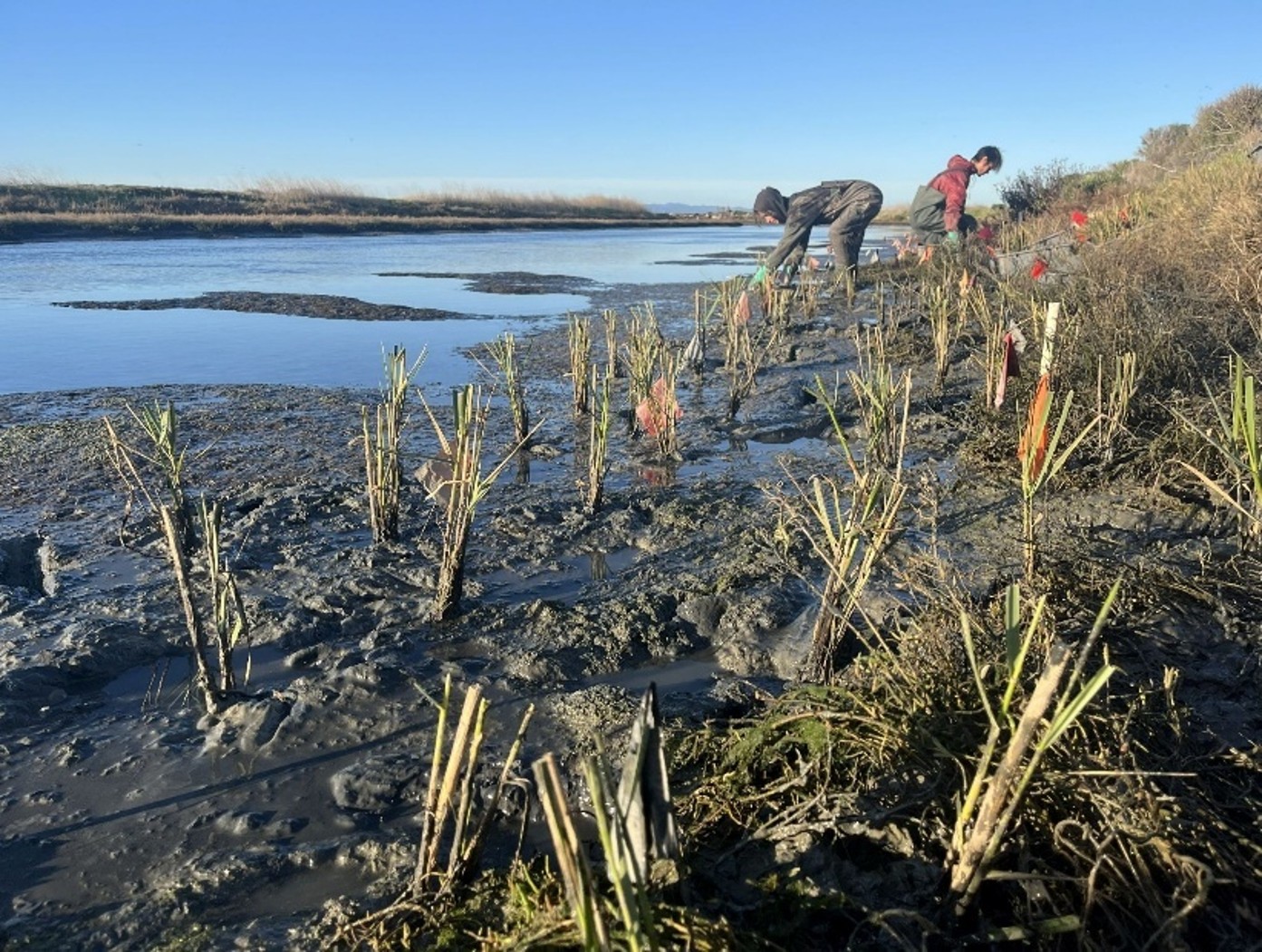
The restoration team successfully wrapped up their 15th season of native plant restoration projects with help from project partners SOLitude Lake Management and RECON Environmental. Project crews planted more than 18,000 natives at eight sites in the central and southern regions of the SF Bay Estuary with the goal of rapid habitat enhancement for Ridgway’s rails and other tidal marsh-dependent wildlife.
Project partners HT Harvey & Associates and Hanford ARC also constructed seven new high tide refuge islands to provide additional habitat cover during high tides in marshes at the East Bay Regional Park District’s Hayward Regional Shoreline and Bair Island (USFWS Don Edwards SF Bay National Wildlife Refuge). The team is now planning for an even bigger 16th season with installations at 12 sites including 19,000 native plants and 13 high tide refuge islands to be constructed!
Monitoring and Treatment
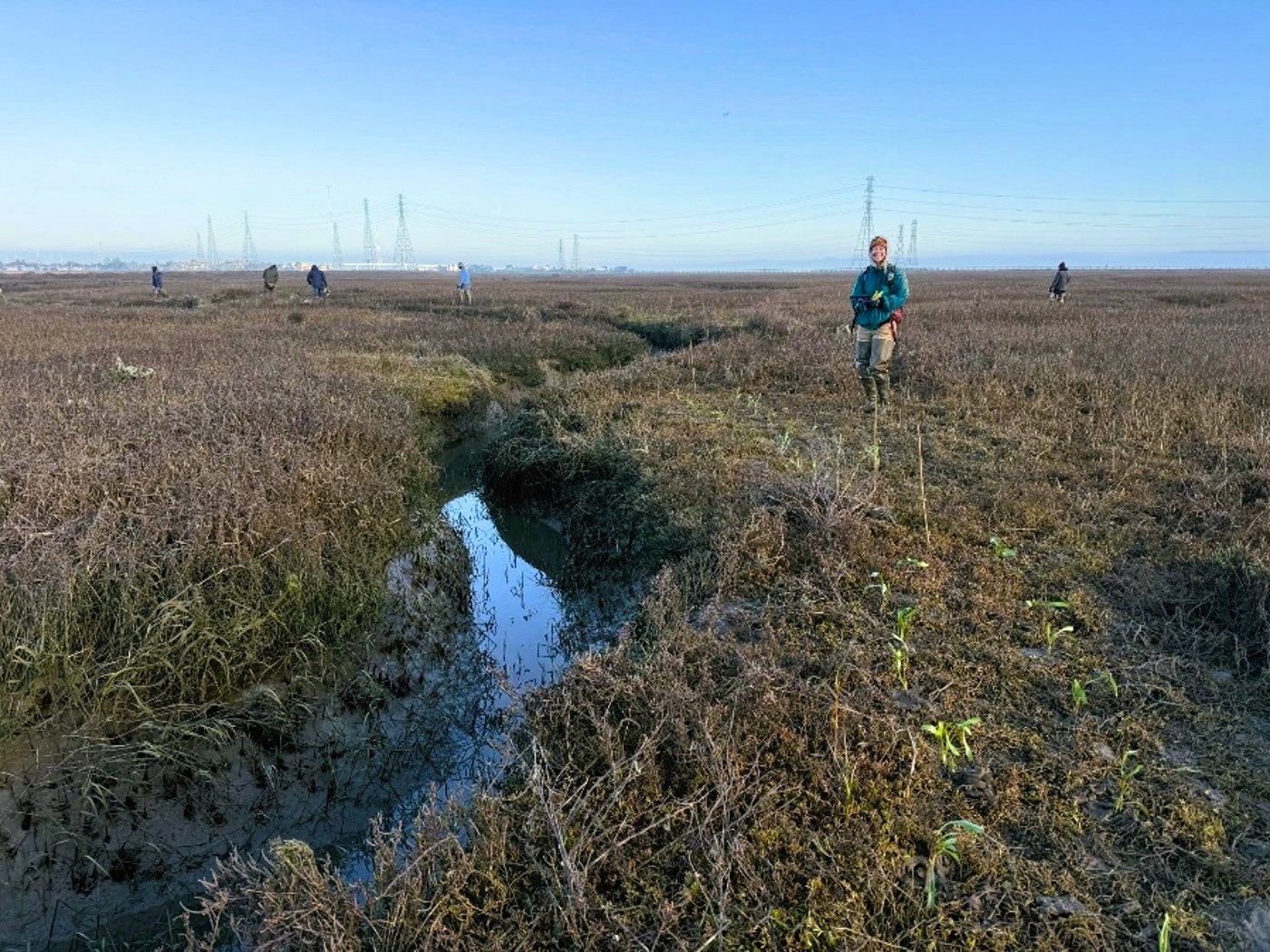
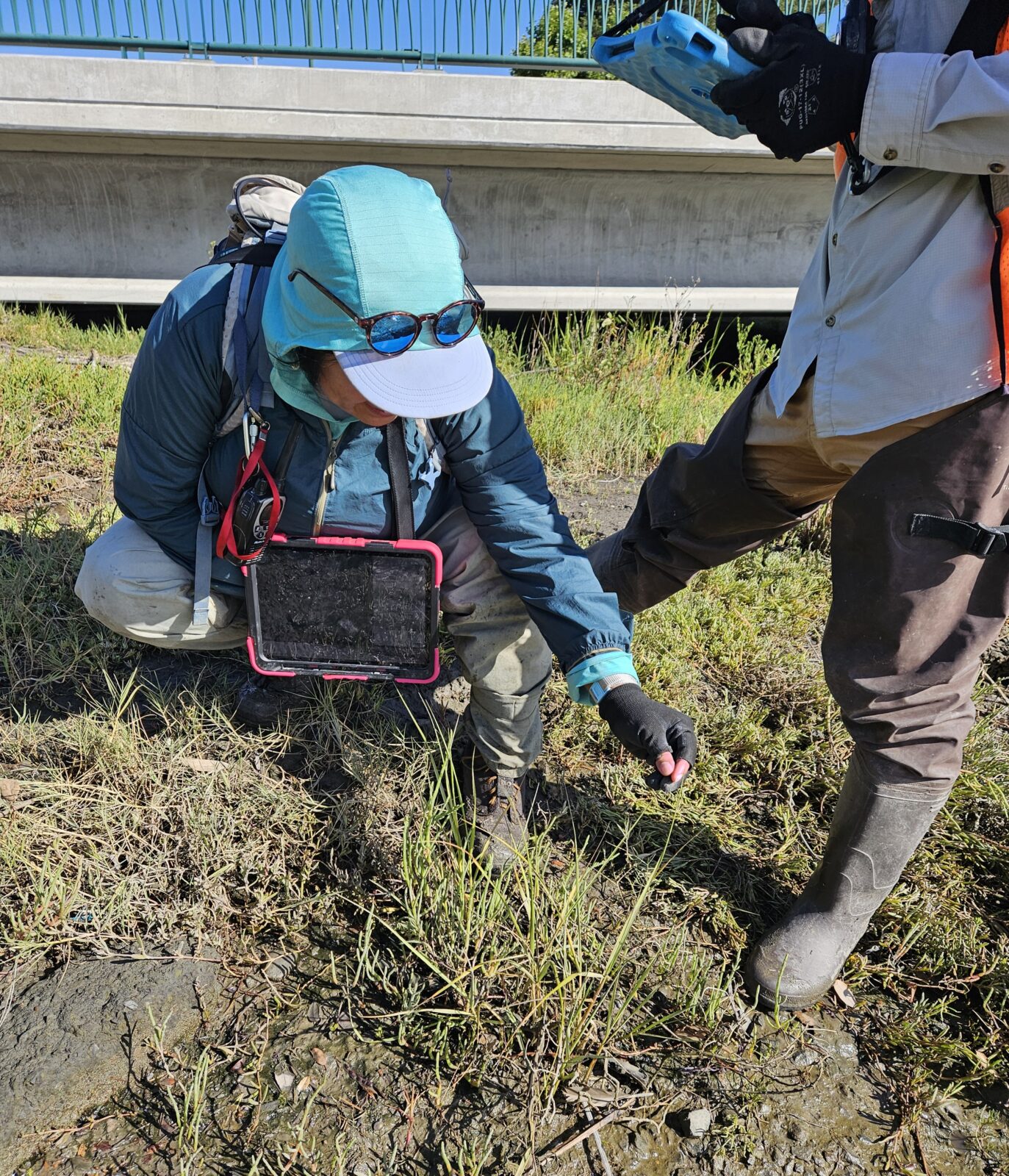
In January, the ISP team conducted its winter round of surveys and removal of Chilean cordgrass (Spartina densiflora) at historic infestation sites around the SF Bay Estuary. Chilean cordgrass has invaded to a much smaller degree than hybrid Spartina alterniflora x foliosa but also poses a serious risk. Within the Estuary where it was once more broadly distributed, it is now limited solely to Marin County. Over successive years, the initially large infestations of S. densiflora have been reduced to near zero with a combination of treatment methods. The population has more recently been reduced so significantly that crews have been able to switch to manual removal and tarping, when needed, of individual S. densiflora plants as they are detected. Any plants that are removed are bagged and disposed of off-site.
The winter round of S. densiflora management was completed in January, with no detections within the SF Bay Estuary for the first time in project history (compared to six seedlings that were found in January 2025). Four hybrid S. densiflora x S. foliosa plants were found and treated within the Corte Madera Creek watershed. With S. densiflora approaching full eradication from the Estuary, the team continues to conduct high-scrutiny surveys in other areas where it was detected within the previous five years (the estimated length of seed viability for this species). One S. densiflora plant was found and removed outside the SF Bay, at Hog Island Oyster Farm (Tomales Bay).
New Interactive Map Online!
In spring of this year, the project team was excited to add an interactive webmap of its most recent biennial invasive Spartina surveys to the ISP homepage. With this map, viewers get an overview of the extent of the project and can zoom in to look up site-specific statistics. The map showcases the scale, the complexity, and the success of the project.
California’s Ridgway’s Rail Monitoring
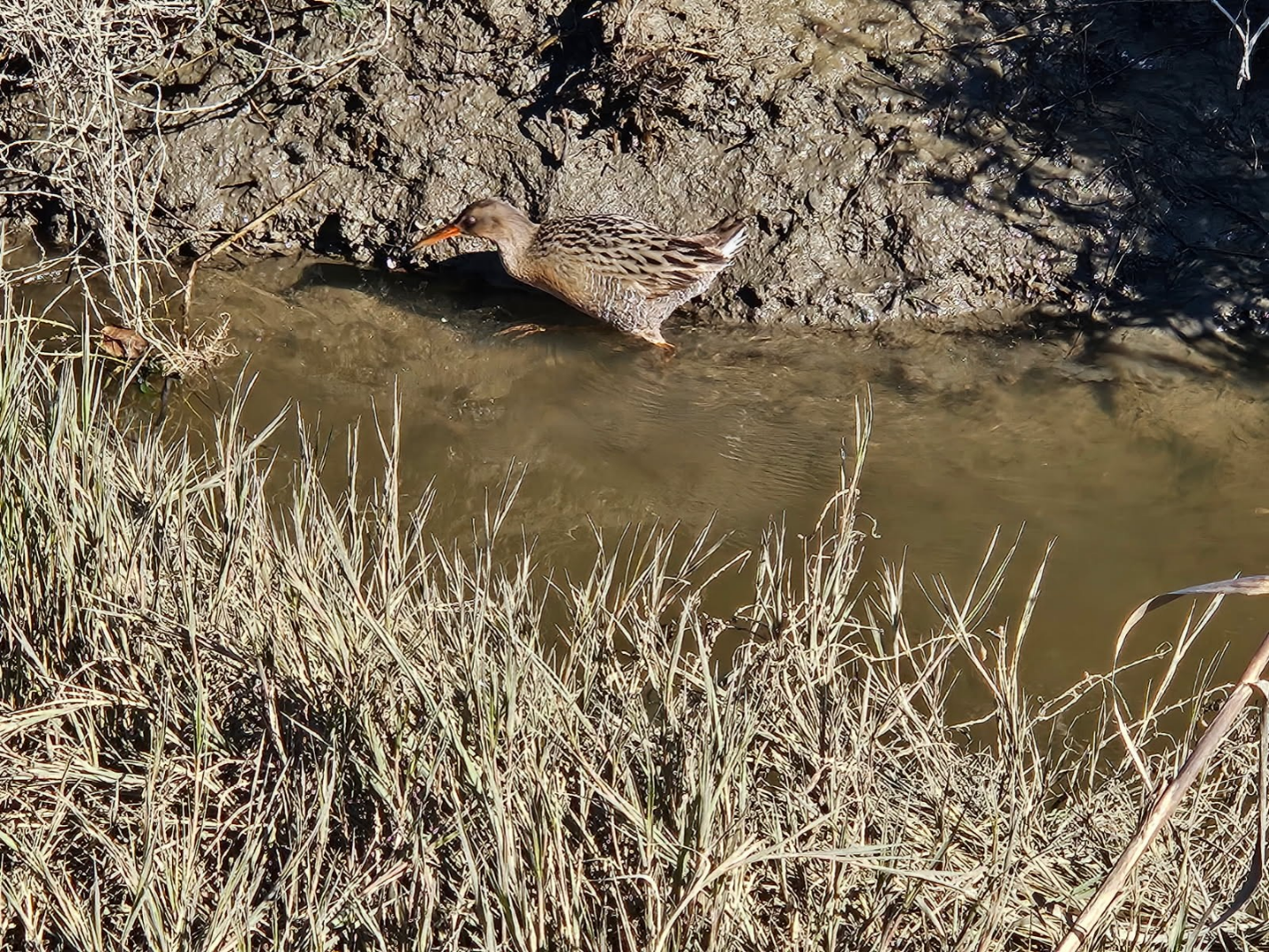
Biologists conducted call-count surveys for Ridgway’s rails from January 15 to April 2. Surveyors recorded an increase in the number of rails detected at young restoration sites, including Knapp Tract (Pond A6), where rail numbers doubled from 8 to 16 since last year’s surveys. OEI Biologists detected a high count of 715 Ridgway’s rails at over 100 sub-areas during the season, which was an increase from 2025, when 633 rails were detected at the same set of sub-areas.
Outreach and Coordination
Earlier this year, the State Coastal Conservancy collaborated with East Bay Regional Parks District (EBRPD) and Golden Gate Bird Alliance (GGBA) to create an outreach plan for future Spartina treatment in San Leandro Bay (Arrowhead Marsh and Martin Luther King (MLK) Jr. New Marsh located in EBRPD’s MLK Jr. Regional Shoreline). The plan consists of specific actions the project team can take to ensure transparency to park visitors, shoreline managers, and more outreach around ISP work in San Leandro Bay and its importance to achieving regional and baywide goals for native tidal marsh habitat that support diverse bird, fish, and wildlife populations.
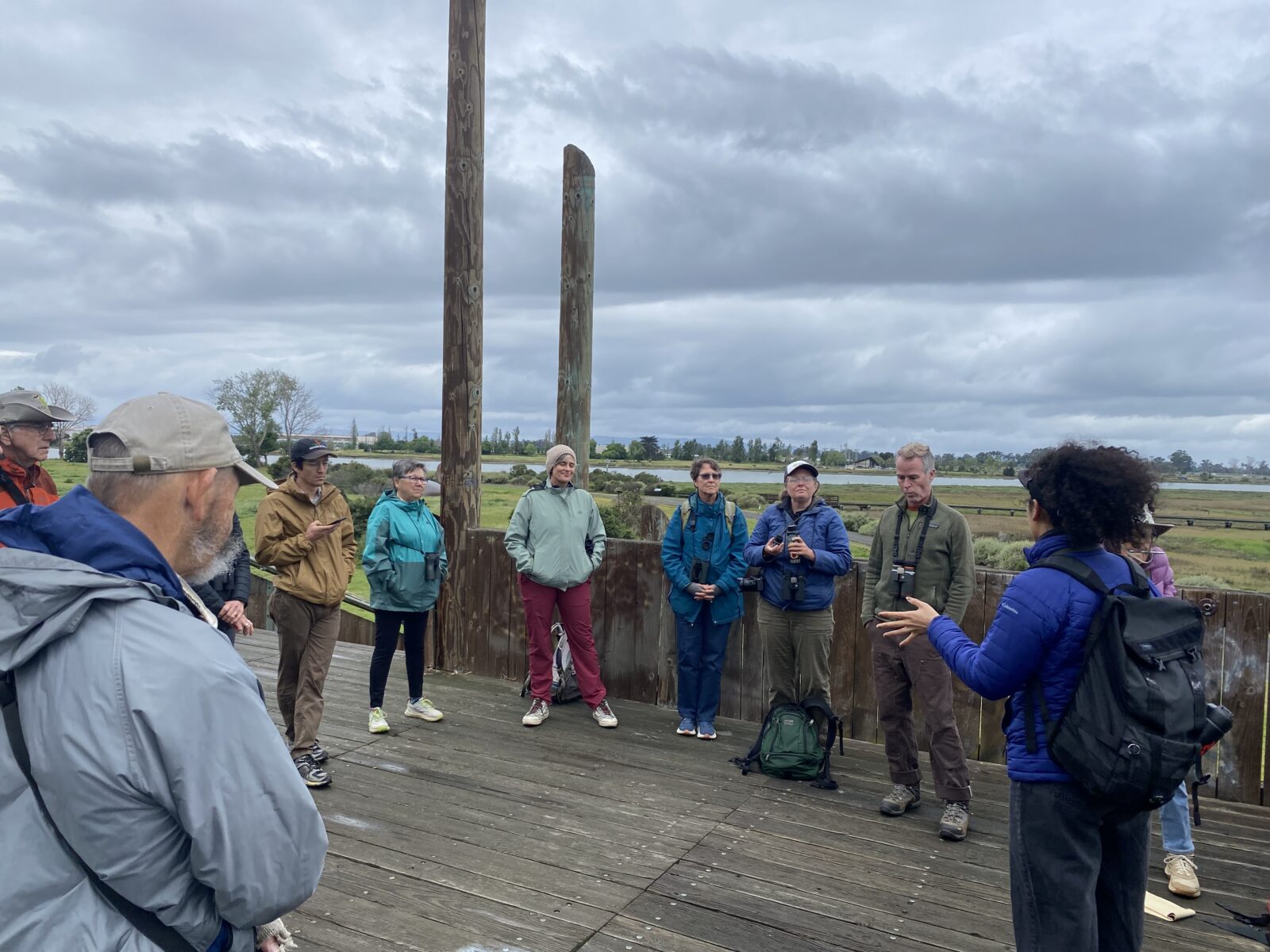
In March, SCC and OEI hosted GGBA leadership at Arrowhead Marsh to observe current marsh conditions and discuss future treatment plans. The group then visited Stege Marsh in Richmond to observe a marsh that had been treated and restored with multiple Ridgway’s rail breeding pairs. The ISP aims to promote sites like Stege Marsh for bird groups to visit as examples of healthy native marshes where people can observe Ridgway’s rails and other wildlife.
Thank you!
Thanks to the wide range of collaborating organizations and dedicated staff and contractors that make this work possible,including: State Coastal Conservancy, US Fish and Wildlife Service, San Francisco Bay Restoration Authority, East Bay Regional Park District, California Dept. of Fish and Wildlife, Port of Oakland, SF Bay Joint Venture, California Invasive Plant Council, Olofson Environmental, Inc., Valley Water, Friends of Corte Madera Creek, Golden Gate Bird Alliance, and more than 150 project landowners, partners, and contractors. Together, we are working to protect the Bay’s shorelines, bolster the native green infrastructure, and help increase regional resilience to climate change.
If you are working at sites along creek mouths, shorelines, or any waterways that connect to the Bay, please get in touch with our team at info@spartina.org.