2025 treatment and monitoring season completed
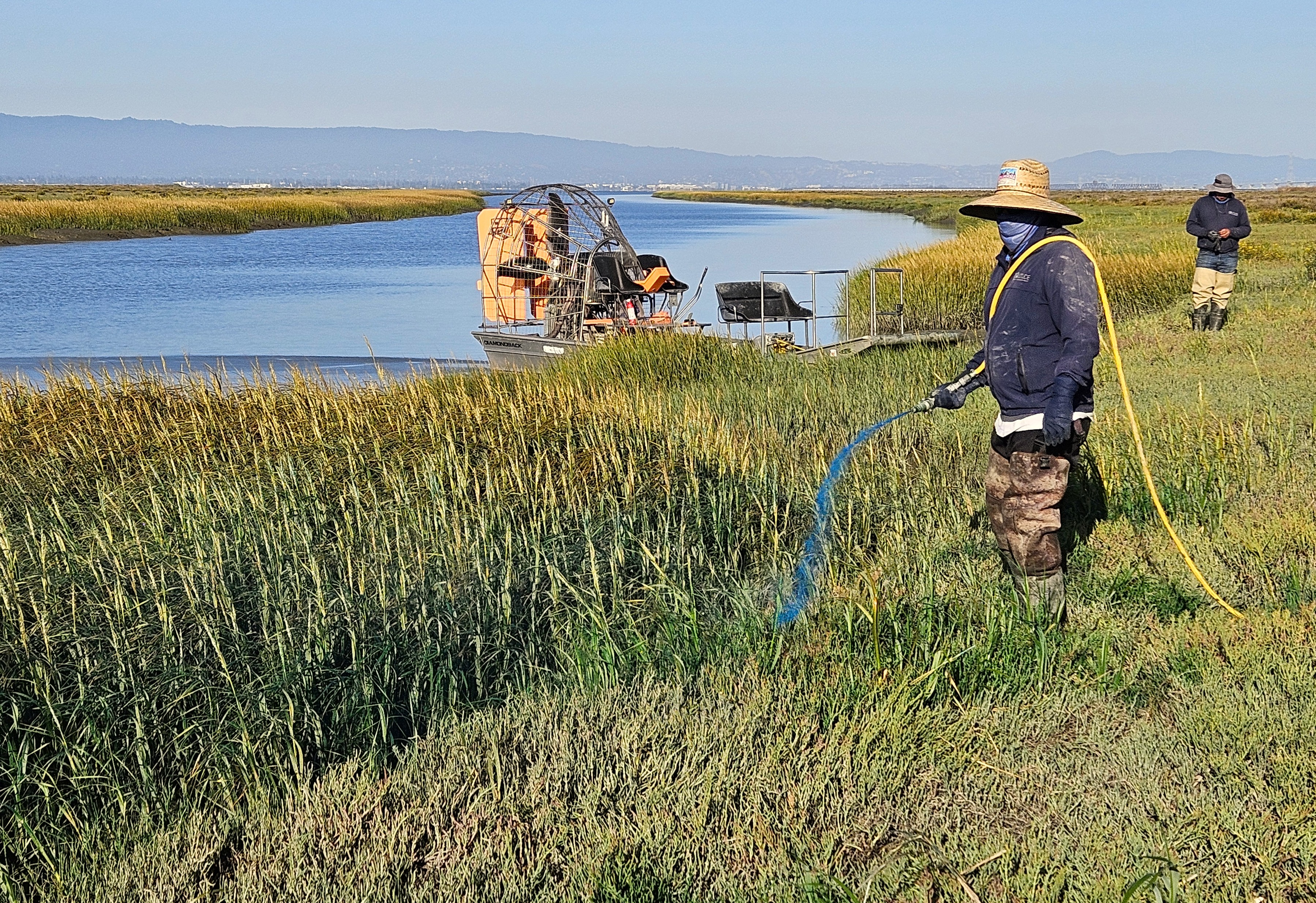
From August through November, the ISP team conducted treatment on invasive Spartina across a range of SF Bay tidal marshes. Of note, the team began the first treatment at North Marsh in San Leandro since 2010. This 60-acre site has the largest single infestation remaining in SF Bay. By concentrating treatments at North Marsh early in the season (treatments were completed by the end of September), the work should inhibit virtually all seed production and dispersal while also beginning to eliminate the mature stands of hybrid Spartina that developed over the decade plus of treatment restrictions. Treatment continued at other large “Phase II” sites — Cogswell Marsh, Citation Marsh, and Fan Marsh — as well as many other sites around the Bay where invasive Spartina has, in most cases, been reduced by more than 95%. A critical part of treatment success is the monitoring work that maps invasive Spartina to be treated. This year, additional late-season mapping was conducted to inform early season treatment next year.
Note: The detailed biennial Spartina Monitoring and Treatment Report covering 2023-2024 has been posted to the ISP website.
New detections
The ISP tracks 200+ sites across the Bay where invasive Spartina has been found through detailed surveys. Occasionally, new sightings are reported. This year, biologists detected new localized infestations along the Novato shoreline, where invasive Spartina had not been observed since 2016, and also within nearby Hamilton Wetlands Restoration Marsh for the first time. In addition, an isolated stand of invasive Spartina was found in Pacheco Marsh in Martinez. All new detections were subsequently treated. As marsh restorations occur around the Bay, they are vulnerable to invasion by Spartina hybrids. The recently breached Pond R4 in the Ravenswood Slough complex in Menlo Park has already been colonized by Spartina. At least one hybrid S. alterniflora patch was identified, genetically verified, and treated. Genetic results are still being processed for samples from another 18 patches to determine the trajectory of colonization for this newly restored marsh, part of the South Bay Salt Ponds Restoration Project. This dynamic situation illustrates the importance of quickly addressing all populations to reduce propagule pressure.
Lots of help
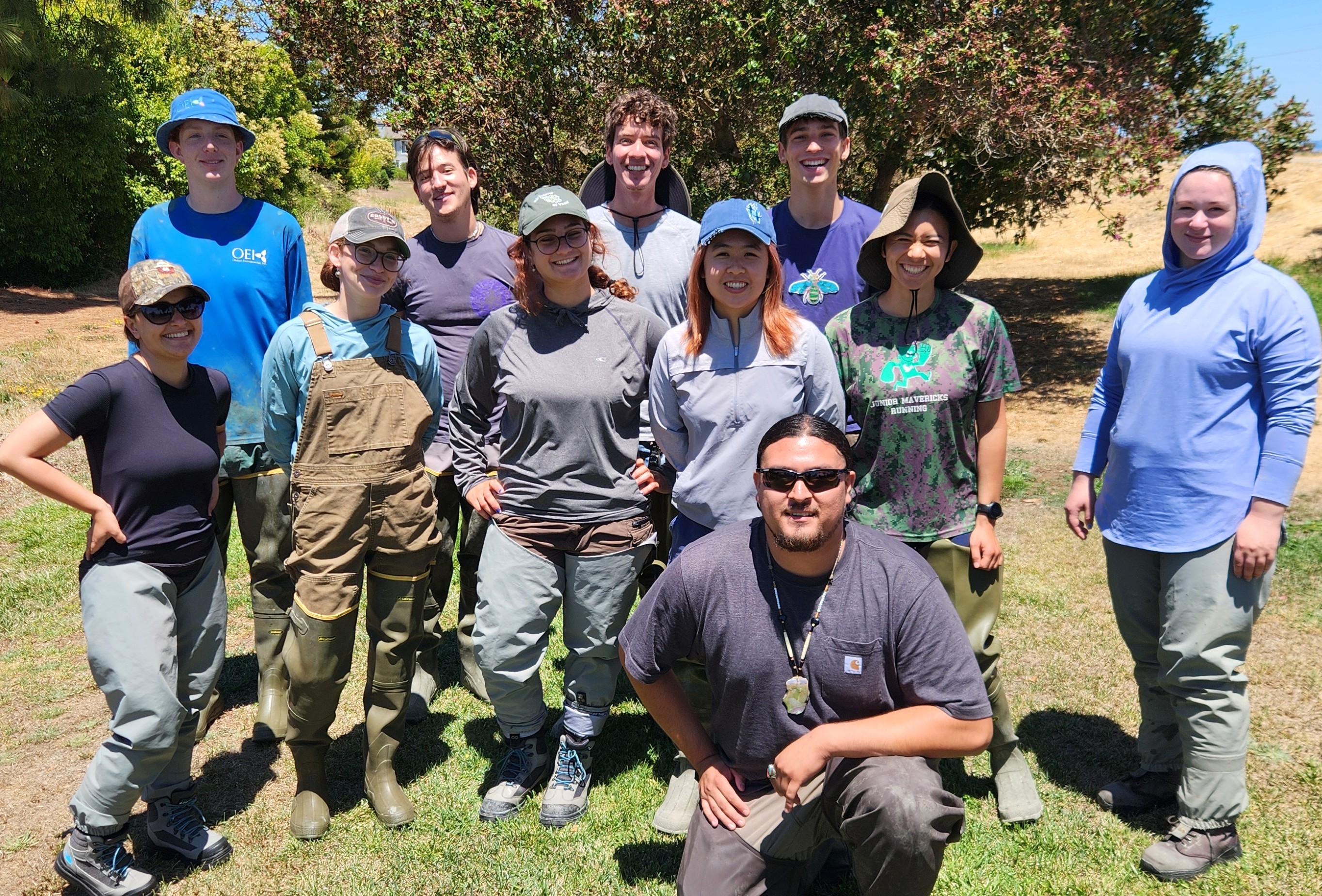
The work of the ISP is made possible by a capable team of contractors and seasonal staff. Treatments are supported by crews from SOLitude Lake Management, RECON Environmental, and Ecological Concerns, Inc., supported by two airboats contracted from Louisiana. The overall coordination of the project is handled by Olofson Environmental, Inc. Ten seasonal field techs were hired this season to help cover the thousands of acres of marshland in Bair Island Ecological Reserve near Redwood City. The work was grueling, and the field techs showed grit and dedication under difficult conditions while gaining skills in GIS mapping, herbicide application, navigation, completing difficult tasks under adverse field conditions, and coordinating with a team.
Coming up – restoration plantings and rail surveys
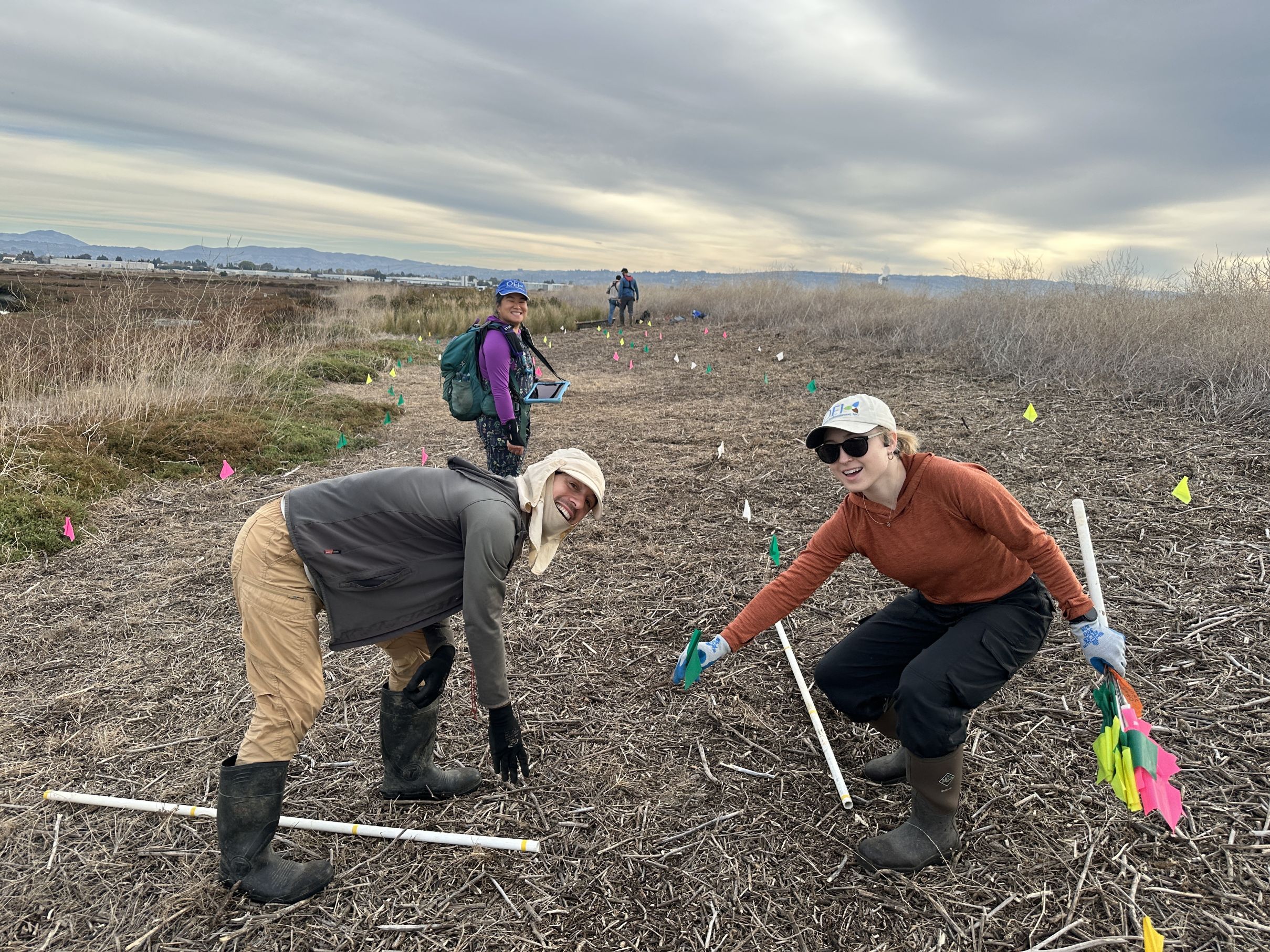
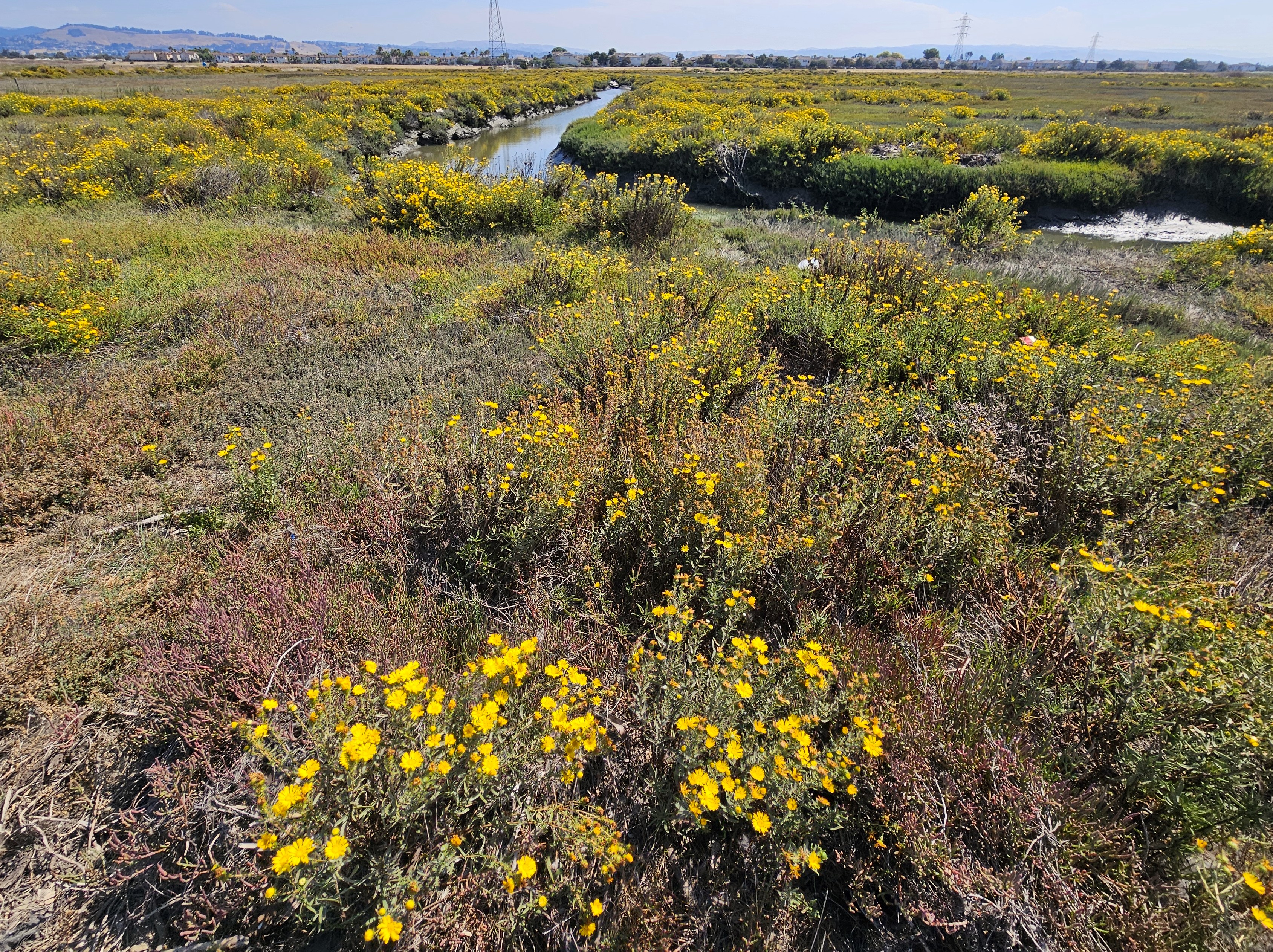
The restoration team is gearing up for their 15th planting season, focusing on enhancing habitat for California Ridgway’s rails and other tidal marsh wildlife. The team will be planting 18,000 plants across eight sites across the Bay, including US Fish & Wildlife Service’s Bair Island Ecological Reserve and East Bay Regional Park District’s Hayward Regional Shoreline. A range of native plant species have been propagated for out-planting, including Pacific cordgrass (Spartina foliosa) for the low marsh one, marsh gumplant (Grindelia stricta) for the mid- to high-marsh zone, and wetland-upland transition zone species for planting above the high tide line. In January, biologists will begin their annual rail surveys. The purpose is twofold. The first goal is to inform field crews about rail presence in each marsh so they avoid them during the upcoming treatment and monitoring season. The second goal is to monitor population trends to ensure that the project is not impacting rails more than expected and more than authorized in the project’s permits. Biologists from Olofson Environmental, Inc., will survey over 100 project sub-areas for Ridgway’s rails in 2026, producing the majority of the data for tracking rail numbers in the region. Surveys will be also be conducted by professionals from the SF Bay National Wildlife Refuges, Point Blue Conservation Science, and California Dept. of Fish and Wildlife.
Working on the Bay shore? Be in touch with the ISP!
As mentioned above, it is critical that ISP knows about any work along the Bay shore or on waterways feeding into the Bay. Invasive Spartina could impact your project, and your project could impact the spread of invasive Spartina. If you are managing existing restoration sites or planning future restoration or sea level rise adaptation projects, ISP wants to hear from you! Please get in touch with the ISP team by emailing info@spartina.org. Thanks!
Thank you to ISP partners
This work could not happen without the wide range of collaborating organizations and dedicated staff and contractors dedicated to its success, including: the California State Coastal Conservancy, US Fish and Wildlife Service, San Francisco Bay Restoration Authority, East Bay Regional Park District, San Mateo County Mosquito Vector Control District, California Dept. of Fish and Wildlife, Port of Oakland, San Francisco Bay Joint Venture, California Invasive Plant Council, Olofson Environmental, Inc., Valley Water, Corte Madera Creek Watershed Council, and more than 150 landowners, agencies, organizations and contractors. Together, we are working to protect the biodiversity of the Bay’s shorelines, bolster native green infrastructure, and increase regional resilience to climate change.